
“Cyber is a delivery risk.”
It is a phrase appearing more and more across construction. Here is exactly how it plays out on a live project, and why it now belongs in the delivery conversation.
WHERE WE STARTED
The myth: “it’s an IT problem”
For a long time, cyber security was treated as a purely technical concern. Something for IT teams, managed service providers or a set of tools to handle. For years that framing made sense. If a system went down it was inconvenient, but it rarely stopped physical work on site.
That is no longer the case.
What has changed in construction
Modern construction projects are deeply digital:
- Building Information Modelling (BIM) platforms
- Cloud-based document management
- Digital scheduling and planning tools
- Mobile access for site teams
- Shared systems across contractors and subcontractors
These systems are now critical to the flow of work, not just supporting it. When they are unavailable, work becomes harder, or it stops entirely.
HOW IT BECOMES A DELIVERY ISSUE
The chain reaction
A cyber incident rarely delays a project on day one. It delays a project through a
chain reaction.
None of this is inevitable. The chain can be broken. Where it breaks depends on how mature your security is.
THE REAL ISSUE
It’s a maturity gap
Here is the part that usually gets missed. Most construction firms do not have a cyber problem. They have a maturity problem.
Antivirus is installed. Multi-factor authentication is switched on. So everyone assumes they are covered. But those are the first rung of a much longer ladder, and the chain reaction runs furthest in the firms that stop there.
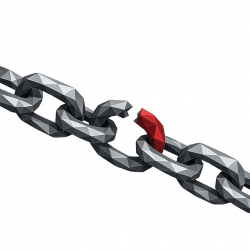
A business that can only control the basics will not know an attacker is inside until work has already stopped. A business that can detect and respond catches the same incident at step one or two, and contains it before the programme is ever affected.
Cyber maturity is simply how far up that ladder you have climbed. It tends to happen in four stages.
THE MAP
The four stages of cyber maturity
The order matters. The gaps matter more. Buying a monitoring tool while access control is wide open spends money without closing the gap that lets incidents through.

STAGE 1
Foundations
Can you control access?
Access control, basic device protection and phishing awareness. Most firms stop here.

STAGE 2
Protection
Can you reduce exposure across sites?
Secured site networks, cloud access control and tested backups. Where most real-world risk sits.

STAGE 3
Detection & Response
Would you know if you were breached?
Monitoring, visibility and a rehearsed response plan. This is the stage that breaks the chain early.

STAGE 4
Maturity
Is cyber part of how you operate?
Data protection, ongoing awareness and leadership review. Cyber becomes business risk management
WHY IT REACHES THE BOARDROOM
Why this matters to leadership
By the time a cyber issue reaches leadership through the chain reaction, it is no longer technical. It is contractual, operational and commercial all at once. By then it is already too late to treat it as just an IT issue.
Maturity changes where that conversation happens. The further up the stages you are, the earlier a problem surfaces, and the smaller and cheaper it is to deal with.
The uncomfortable question
If a cyber incident took one of your active sites offline tomorrow morning:
Those questions do not sit with IT alone. They sit with delivery.
THE TAKEAWAY
It belongs in the delivery conversation
Cyber has not suddenly become more important. It has moved into a different part of the business, from a background IT concern into something that directly affects your ability to deliver on time.
The firms that recover quickly are not the ones with the most software. They are the ones who climbed the stages in the right order and closed the gaps before an incident found them.

See where you actually sit
Our Cyber Maturity Map is a five-minute self-check built for construction. It shows your stage and the one priority to fix next. It is the first step of CyberAscend, the framework we use to move firms up the stages:
Most construction firms overestimate their position. If you are not sure where you are, you are probably earlier than you think.
To discuss this further with a member of our team, get in touch by clicking here.